Introduction
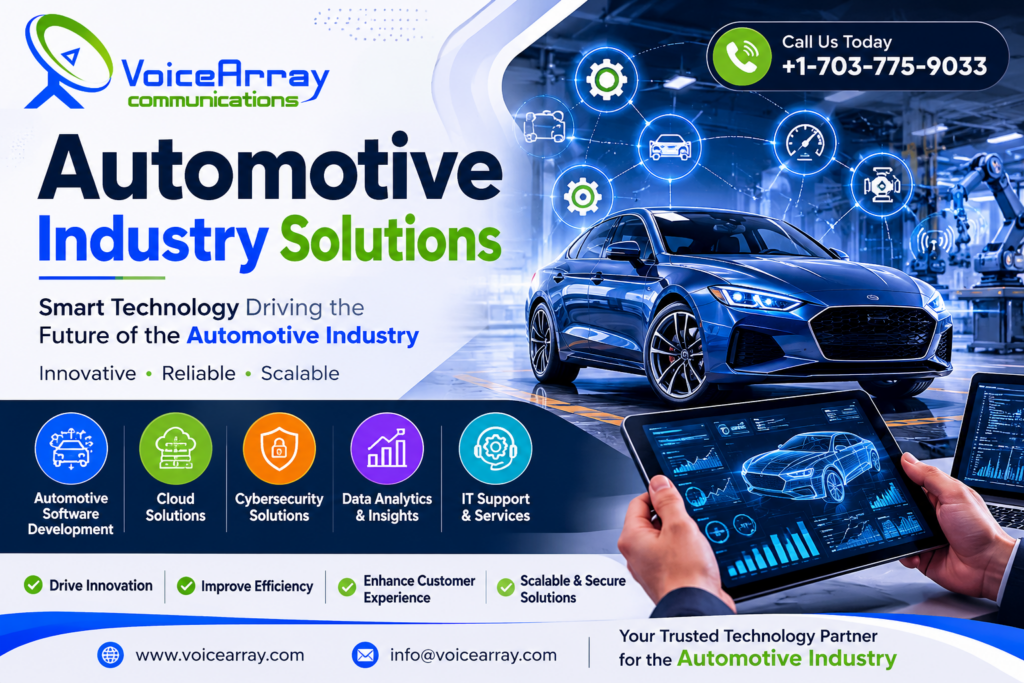
Automotive Industry Solutions are helping modern automotive businesses adapt to a rapidly changing digital landscape. From connected vehicles and electric mobility to cloud platforms, artificial intelligence, cybersecurity, and digital customer experiences, technology now influences almost every part of the Automotive Industry.
Today, automotive companies need more than traditional IT systems. They need connected, scalable, and secure Solutions that can support vehicle software, manufacturing operations, supply chains, dealerships, customer service, data management, and digital platforms.
For organizations working across automotive manufacturing, dealerships, parts distribution, mobility services, and automotive technology, the right technology Services can improve operational visibility, simplify workflows, strengthen cybersecurity, and create better digital experiences.
What Are Automotive Industry Solutions?
Automotive Industry Solutions are technology-based services, platforms, and digital systems designed around the specific operational needs of automotive organizations.
These Solutions can cover areas such as:
- Automotive software development
- Cloud computing and infrastructure
- Data management and analytics
- Cybersecurity
- Connected vehicle platforms
- Customer relationship management
- Enterprise application development
- Website and mobile application development
- IT support and managed Services
- Digital customer experience
- Automation and artificial intelligence
The objective is not simply to introduce new technology. Effective Automotive Industry Solutions connect technology with business processes so companies can manage operations more efficiently while preparing for future changes.
Why the Automotive Industry Needs Digital Solutions
The Automotive Industry has become increasingly software-driven. Modern vehicles can include sophisticated computing systems, sensors, connectivity, infotainment platforms, driver-assistance technologies, and software that can be updated after a vehicle leaves the factory.
The International Energy Agency reported in 2026 that the transition toward software-defined vehicles is accelerating, particularly alongside the growth of electric vehicles. Vehicles are increasingly becoming software platforms in which functionality can evolve through updates and digital services.
This creates opportunities, but it also creates technology challenges.
Automotive organizations must manage large volumes of data, integrate systems across departments and suppliers, maintain reliable digital infrastructure, and secure connected environments. These requirements make technology Services an important part of modern automotive business strategy.
Key Automotive Industry Solutions for Modern Businesses
1. Automotive Software Development
Software is now central to many automotive operations. Businesses may need custom applications for production management, inventory, fleet operations, vehicle data, dealership workflows, customer portals, or internal administration.
Custom software development allows automotive organizations to create applications around their actual processes rather than forcing operations into systems that do not fully match their requirements.
Software can also support integrations between enterprise systems, customer platforms, databases, APIs, and third-party applications.
2. Cloud Solutions and Infrastructure
Cloud technology can provide automotive organizations with flexible computing resources, centralized data access, application hosting, backup capabilities, and scalable infrastructure.
Cloud-based Automotive Industry Solutions can support:
- Enterprise applications
- Data storage
- Business intelligence
- Application development
- Remote collaboration
- Backup and disaster recovery
- Customer-facing platforms
A carefully planned cloud strategy can also make it easier to scale digital Services as business requirements change.
3. Automotive Data and Analytics
Automotive companies generate information from manufacturing systems, dealerships, websites, connected devices, customer interactions, inventory platforms, and business applications.
Data analytics Solutions can transform this information into useful business insights.
For example, automotive organizations can analyze customer behavior, inventory movement, service activity, sales trends, operational performance, and digital engagement.
The value comes from turning disconnected information into understandable data that supports better business decisions.
4. Cybersecurity for Automotive Environments
Cybersecurity has become increasingly important because modern vehicles and automotive systems are connected to networks, software platforms, cloud infrastructure, and external devices.
NHTSA’s cybersecurity guidance specifically recognizes modern vehicles as cyber-physical systems and recommends a risk-based approach to vehicle cybersecurity. Its guidance applies across vehicle and equipment designers, suppliers, manufacturers, and other organizations involved in vehicle electronic systems and software.
Automotive cybersecurity can include network security, identity management, access controls, vulnerability management, secure software development, monitoring, incident response, and data security.
NIST also maintains an Automotive Cybersecurity Community of Interest focused on issues including AI cybersecurity, supply-chain security, software and firmware integrity, and connected vehicle risks.
For automotive organizations, cybersecurity should therefore be considered throughout the technology lifecycle rather than treated as an isolated IT function.
Automotive Industry Solutions for Connected and Software-Defined Vehicles
Connected vehicles are changing how manufacturers, technology companies, service providers, and customers interact with automotive systems.
Software-defined vehicles allow more vehicle functionality to be managed through software. This can support features such as over-the-air updates, digital services, connected applications, data-driven maintenance, and personalized experiences.
However, connected environments require careful architecture.
Automotive technology teams need to consider:
- Secure communication between systems
- Data privacy and governance
- Software update processes
- System monitoring
- Identity and access management
- Cybersecurity testing
- Integration with cloud platforms
- Reliability and performance
SAE research published in 2026 also highlights the relationship between software-defined vehicles, V2X communication, embedded software, functional safety, cybersecurity, and machine learning.
Artificial Intelligence and Automation in Automotive Business
Artificial intelligence is becoming another important part of Automotive Industry Solutions.
AI can assist with customer service, document processing, predictive analytics, quality inspection, workflow automation, demand forecasting, knowledge management, and other business processes.
For example, an automotive organization could use AI-powered systems to classify customer inquiries, identify patterns in service requests, analyze operational data, or automate repetitive administrative tasks.
The important consideration is responsible implementation. AI systems should have clear objectives, reliable data, appropriate security controls, human oversight where necessary, and measurable business outcomes.
Digital Solutions for Automotive Dealerships
Automotive dealerships also depend heavily on digital technology.
A dealership may need a combination of website development, CRM integration, online lead management, customer communication, inventory systems, analytics, appointment scheduling, and digital marketing.
A connected digital environment can help dealerships manage customer interactions from the initial inquiry through sales, service appointments, follow-ups, and ongoing communication.
This is particularly important because customers increasingly research vehicles, compare options, communicate with dealerships, and schedule services online.
How Automotive Solutions Improve Customer Experience
Customer expectations have changed alongside digital technology.
People expect websites and applications to load quickly, provide useful information, work properly on mobile devices, and make communication convenient.
Automotive companies can improve the digital customer journey through:
- Responsive websites
- Mobile applications
- Online appointment scheduling
- Digital customer portals
- Automated communication
- Live chat and support
- Personalized content
- Integrated CRM systems
- Online service information
A better customer experience does not depend on one technology. It comes from connecting multiple digital touchpoints into a consistent journey.
The Role of IT Services in the Automotive Industry
Technology requires ongoing management after implementation.
IT Services can support automotive organizations with infrastructure monitoring, technical support, network management, cloud administration, cybersecurity, software maintenance, backup management, and system troubleshooting.
For businesses with multiple locations or distributed teams, centralized IT management can also make technology operations easier to monitor.
This is where a technology partner such as VOICEARRAY can support organizations looking to plan, develop, integrate, and maintain digital Solutions around their business requirements.
What Should Businesses Consider When Choosing Automotive Industry Solutions?
Selecting a technology Solution should begin with the business problem rather than the technology itself.
Before investing, organizations should consider:
- What operational problem needs to be addressed?
- Which systems need integration?
- What data will the Solution use?
- How will security and access be managed?
- Can the platform scale as requirements change?
- How will employees and customers use it?
- What maintenance will be required?
- How will performance be measured?
A structured assessment can help organizations avoid unnecessary technology investments and focus resources on Solutions that support measurable business objectives.
The Future of Automotive Industry Solutions
The Automotive Industry is moving toward a more connected, software-driven, data-intensive environment.
Electric vehicles, connected mobility, AI, cloud computing, software-defined vehicles, advanced driver-assistance systems, and digital customer platforms are likely to continue influencing automotive technology strategies.
At the same time, cybersecurity and responsible data management will remain critical. NHTSA continues to emphasize cybersecurity for automated vehicle technologies because these systems depend on electronics, sensors, software, and computing infrastructure.
The future will therefore not be about adopting one technology. It will be about creating an integrated technology environment where software, data, infrastructure, security, and customer experiences work together.
Why Choose VOICEARRAY for Automotive Technology Services?
VOICEARRAY can help businesses approach digital transformation through practical technology Services, including software development, IT Services, web development, mobile applications, cybersecurity-focused technology, cloud Solutions, and digital platforms.
The right approach starts with understanding the organization’s current infrastructure, operational challenges, customers, and long-term objectives. From there, technology Solutions can be planned around actual business requirements.
For automotive companies, this approach can provide a foundation for modernizing existing systems while preparing for increasingly connected and software-driven operations.
FAQ
What are Automotive Industry Solutions?
Automotive Industry Solutions are technology Services and platforms designed to address the needs of automotive manufacturers, suppliers, dealerships, mobility businesses, and related organizations. They can include software development, cloud infrastructure, cybersecurity, data analytics, automation, connected vehicle technology, websites, mobile applications, and IT Services.
Why are Automotive Industry Solutions important?
Automotive Industry Solutions help organizations manage increasingly complex digital operations. They can connect business systems, improve access to data, support customer experiences, strengthen cybersecurity, automate repetitive processes, and provide infrastructure for connected and software-driven automotive environments.
How can technology improve the Automotive Industry?
Technology can improve the Automotive Industry by connecting systems, automating workflows, analyzing operational data, supporting digital customer experiences, improving communication, and enabling software-based vehicle and business functions. Cloud computing, AI, analytics, cybersecurity, and custom software are among the major technology areas involved.
What Services are included in Automotive Industry Solutions?
Automotive Industry Solutions may include custom software development, web and mobile application development, cloud Services, IT support, cybersecurity, data analytics, system integration, automation, CRM integration, and digital customer experience Solutions. The appropriate Services depend on an organization’s technology environment and business objectives.
Conclusion: Building a More Connected Automotive Future
The Automotive Industry is changing rapidly as vehicles, businesses, customers, and technology become more connected. Organizations that invest in practical digital infrastructure can create better ways to manage information, applications, customers, operations, and security.
Automotive Industry Solutions are therefore not limited to vehicle technology. They can cover the complete digital environment surrounding an automotive business, from software and cloud infrastructure to cybersecurity, data, customer platforms, and IT Services.