Introduction
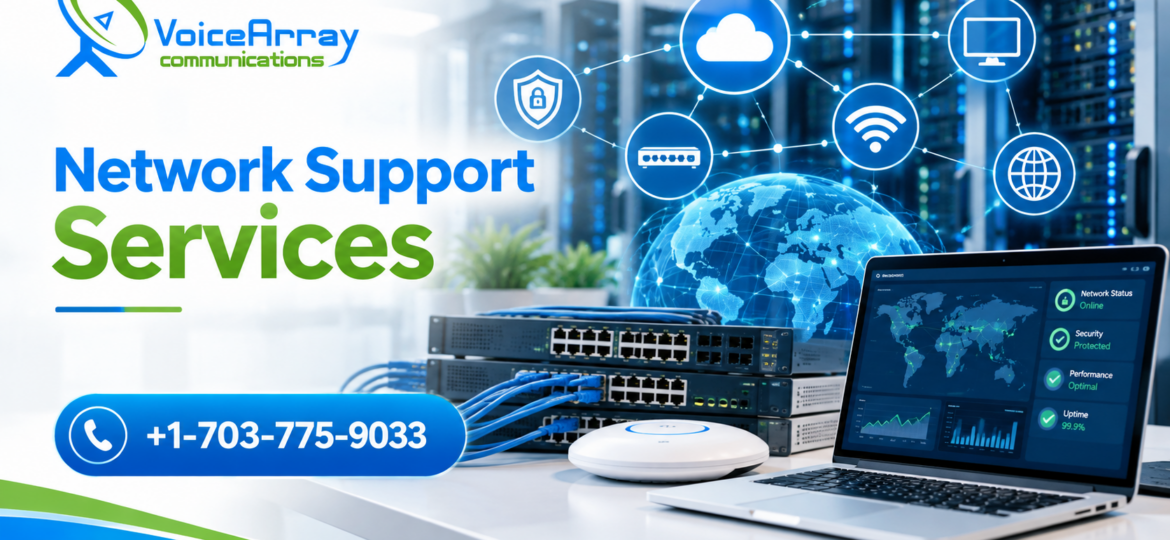
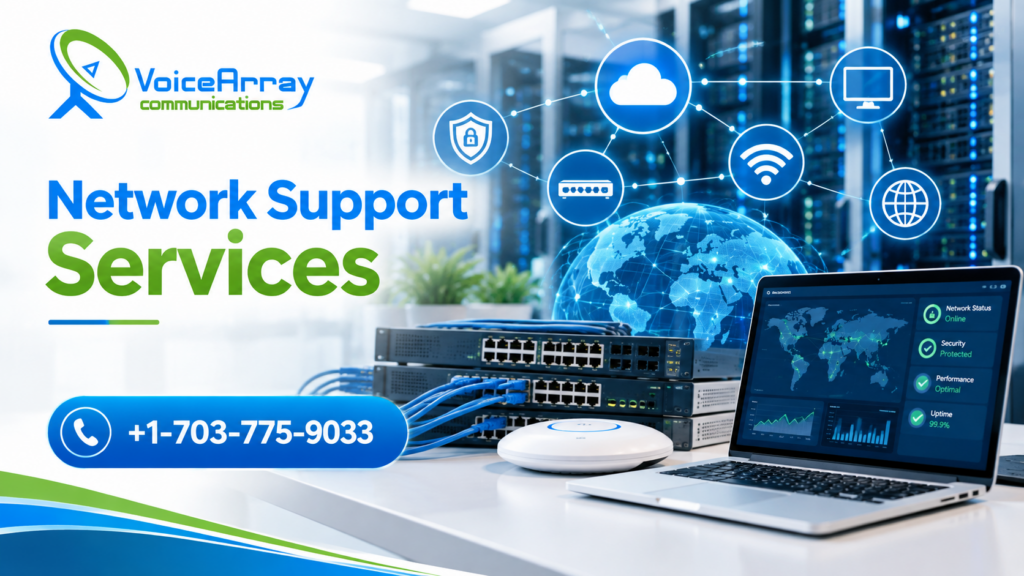
Network Support Services help businesses keep their networks secure, reliable, fast, and available for employees, applications, cloud platforms, and connected devices. A well-supported network is more than an internet connection; it is the infrastructure that allows people, systems, servers, applications, and data to communicate efficiently.
For growing organizations, network problems can quickly become business problems. Slow connectivity, wireless failures, configuration errors, hardware issues, security threats, and unexpected downtime can interrupt productivity and increase operational costs.
This guide explains what network support includes, why it matters, how professional network support works, and what businesses should consider when managing modern network infrastructure.
What Are Network Support Services?
Network Support Services are professional IT services designed to maintain, troubleshoot, secure, monitor, and improve an organization’s network infrastructure.
Depending on the organization’s size and requirements, network support may cover:
- Network monitoring and performance management
- Router, switch, and firewall support
- Wireless network configuration
- LAN and WAN management
- VPN configuration and troubleshooting
- Network security monitoring
- Connectivity and bandwidth troubleshooting
- Network device configuration
- Network documentation
- Software and firmware updates
- Network infrastructure planning
- Remote and onsite technical support
The objective is straightforward: keep business-critical network resources available, secure, and performing as expected.
Professional network support can also be proactive rather than purely reactive. Instead of waiting for employees to report a problem, IT teams can monitor network performance, identify unusual activity, investigate potential failures, and address configuration issues before they become larger disruptions.
NIST guidance similarly describes network monitoring as a process involving alerts, logs, traffic analysis, asset management, performance diagnosis, and identification of device misconfigurations or malfunctions.
Why Network Support Is Important for Modern Businesses
Businesses increasingly depend on interconnected systems. Microsoft 365, cloud applications, VoIP, remote work platforms, customer databases, SaaS applications, security systems, and internal applications all depend on reliable connectivity.
When the network becomes unstable, multiple business functions can be affected simultaneously.
1. Reduce Network Downtime
Professional monitoring and maintenance can help identify network problems before they cause extended outages.
Support teams can monitor devices, bandwidth utilization, connectivity, and other performance indicators to identify potential issues and respond more quickly.
2. Improve Network Performance
A network may technically be operational while still performing poorly.
Slow applications, high latency, packet loss, wireless dead zones, and overloaded devices can affect employee productivity. Network support professionals can investigate these problems and determine whether the cause is configuration, hardware, bandwidth, traffic, or another infrastructure issue.
3. Strengthen Network Security
Network infrastructure is also part of an organization’s security environment.
Firewalls, VPNs, access controls, monitoring systems, segmentation, updates, and secure configurations can help reduce exposure to unauthorized access and suspicious activity.
NIST’s network security guidance emphasizes testing and monitoring as important components of an organization’s broader security objectives.
4. Support Remote and Hybrid Work
Employees may connect from offices, homes, branch locations, and mobile environments.
Reliable VPN connectivity, secure remote access, wireless infrastructure, identity controls, and cloud connectivity therefore become important components of modern network management.
5. Support Business Growth
A network designed for 10 employees may not perform the same way when an organization grows to 50, 100, or more users.
Professional network support can help businesses plan infrastructure changes before growth creates performance or reliability problems.
What Does Network Support Include?
The exact scope varies between providers, but comprehensive Network Support Services commonly include several interconnected areas.
Network Monitoring and Management
Continuous monitoring can help IT teams identify unusual traffic, device failures, connectivity problems, and performance degradation.
Monitoring may include routers, switches, firewalls, access points, servers, and other network-connected infrastructure.
Router, Switch, and Firewall Support
Network devices require appropriate configuration and ongoing maintenance.
Support may include device configuration, firmware management, troubleshooting, rule reviews, replacement planning, and performance analysis.
Wi-Fi and Wireless Network Support
Wireless connectivity is critical for offices, retail environments, healthcare organizations, restaurants, warehouses, and many other businesses.
Professional support can address coverage problems, interference, access-point configuration, authentication issues, and capacity concerns.
VPN and Remote Access
VPNs and other remote-access technologies allow authorized users to securely connect to business resources from outside the office.
Network support can help configure, monitor, troubleshoot, and maintain these connections.
Network Troubleshooting
When users experience slow connections or application problems, the visible symptom may not reveal the actual cause.
A structured troubleshooting process can examine connectivity, DNS, routing, bandwidth, device health, configuration, authentication, and other possible causes.
Network Support vs. Network Monitoring
These terms are related but not identical.
Network monitoring focuses primarily on observing network health, performance, traffic, devices, and alerts.
Network support is broader. It can include monitoring as well as troubleshooting, configuration, maintenance, security support, documentation, infrastructure planning, and technical assistance.
In practice, effective network management often combines both.
Monitoring helps identify a problem. Network support helps determine why it happened and what should be done about it.
When Should a Business Consider Professional Network Support?
Professional network support can become particularly valuable when an organization experiences recurring technical problems or when its infrastructure becomes difficult to manage internally.
Common warning signs include:
- Frequent internet or connectivity interruptions
- Slow business applications
- Unreliable office Wi-Fi
- Recurring VPN problems
- Network devices reaching capacity
- Difficulty monitoring infrastructure
- Security concerns
- Lack of network documentation
- Rapid business expansion
- Multiple offices or remote employees
- Limited internal IT resources
A business does not necessarily need to wait for a major outage before reviewing its network strategy.
A proactive assessment can identify performance, security, capacity, and configuration issues while they are still manageable.
How Professional Network Support Works
A structured approach generally begins with understanding the existing environment.
Step 1: Assess the Network
The provider reviews network architecture, devices, connectivity, users, applications, security controls, and known issues.
Step 2: Establish Monitoring
Important network components can be monitored for availability, performance, unusual activity, and potential failures.
Step 3: Troubleshoot Existing Issues
Known problems are investigated using logs, monitoring information, configuration reviews, and performance data.
Step 4: Maintain the Infrastructure
Routine maintenance may include updates, configuration reviews, backups of configurations, device lifecycle planning, and documentation.
Step 5: Improve and Scale
As business requirements change, network infrastructure can be adjusted to accommodate additional users, locations, applications, devices, and security requirements.
This approach shifts network management from simply reacting to failures toward maintaining a more predictable technology environment.
How to Choose Network Support Services
Businesses evaluating a network support provider should look beyond basic troubleshooting.
Consider whether the provider can support your actual environment, including your network equipment, cloud applications, remote workforce, security requirements, and growth plans.
Important questions include:
- Does the provider offer proactive monitoring?
- Can it support both wired and wireless infrastructure?
- Does it provide remote and onsite assistance when required?
- How are network security issues handled?
- Can the provider document the network environment?
- Does it offer after-hours or emergency support?
- Can services scale as the business grows?
- Does the provider understand your business-critical applications?
The right service model depends on the organization’s infrastructure, internal IT capabilities, risk tolerance, budget, and operational requirements.
Network Support Services and Modern SEO
For technology companies discussing network support online, helpful content should answer real customer questions rather than simply repeat the same keyword.
Google’s current guidance says its AI Search features continue to rely on foundational SEO practices, including crawlability, internal linking, page experience, accessible text, and helpful, reliable, people-first content. Google also states that there are no special technical requirements or dedicated schema types required specifically for AI Overviews or AI Mode.
Google’s guidance also emphasizes original information, demonstrated expertise, trustworthy sourcing, and content that provides substantial value beyond simply rewriting existing material.
For VoiceArray, this means a network-support resource should be useful to an actual business owner or IT decision-maker first, while naturally incorporating related concepts such as network monitoring, IT support, network security, wireless support, VPN support, firewall management, remote IT support, and infrastructure management.
Network Support Services FAQs
What are Network Support Services?
Network Support Services are professional IT services that help businesses maintain, troubleshoot, monitor, secure, and improve their network infrastructure. They can include router and switch support, firewall management, wireless troubleshooting, VPN support, network monitoring, configuration, maintenance, and infrastructure planning.
Why are Network Support Services important?
Network Support Services help businesses maintain reliable connectivity and reduce disruptions caused by configuration problems, hardware failures, performance issues, or security concerns. Proactive monitoring and maintenance can also help identify problems before they develop into larger operational interruptions.
What is included in Network Support Services?
Network Support Services can include network monitoring, troubleshooting, firewall and router management, switch support, Wi-Fi management, VPN assistance, network security, device configuration, updates, documentation, performance analysis, and infrastructure planning. The exact services depend on the provider and business requirements.
Can small businesses use Network Support Services?
Yes. Small businesses can use Network Support Services to access specialized technical expertise without necessarily maintaining a large internal networking team. Outsourced support can help with monitoring, troubleshooting, security, wireless infrastructure, network maintenance, and technology planning as the organization grows.
Conclusion: Build a More Reliable Network
A dependable network is an essential part of modern business operations. From employee connectivity and cloud applications to cybersecurity and remote work, organizations rely on network infrastructure every day.
Network Support Services provide a structured way to monitor, maintain, troubleshoot, secure, and improve that infrastructure. Instead of treating connectivity problems as isolated technical issues, businesses can take a proactive approach to network performance and reliability.
VoiceArray helps businesses address IT and network requirements with practical technology support designed around their operational needs. If your organization is experiencing recurring connectivity problems, performance issues, wireless challenges, or growing network demands, evaluating your current infrastructure can be a valuable first step.
Contact VoiceArray to discuss your network support and IT infrastructure requirements.