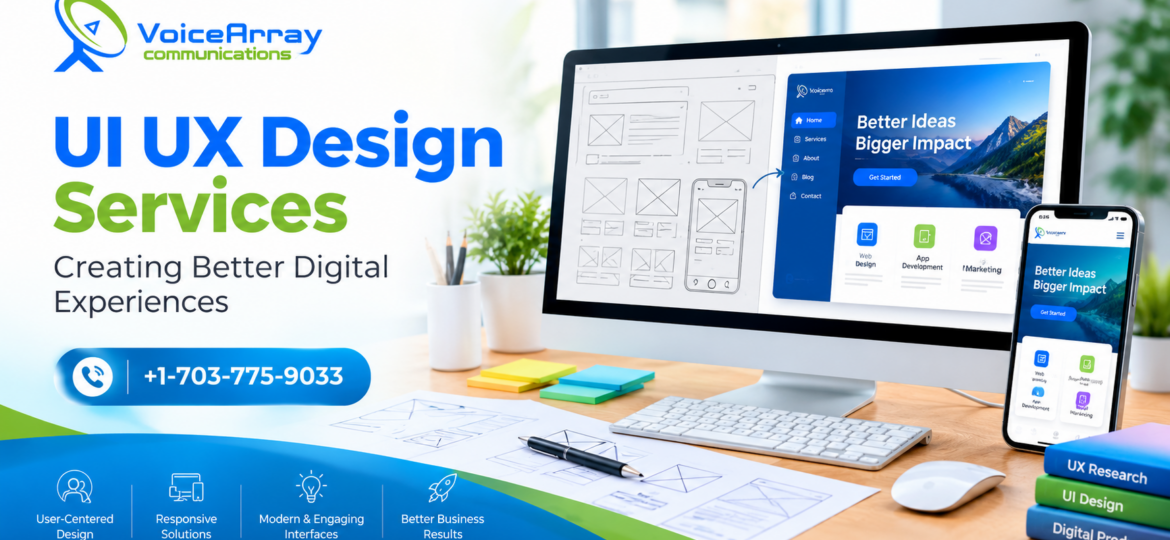
UI UX Design Services help businesses create websites, applications, and digital products that are easier to use, visually engaging, accessible, and aligned with customer expectations. Effective UI UX Design goes beyond making a digital product look attractive. It combines user research, information architecture, interaction design, visual design, usability, and testing to create a complete experience.
For businesses competing online, design can influence how quickly visitors understand an offer, navigate a website, complete a task, or decide whether to trust a brand. That makes thoughtful UI and UX design an important part of modern digital strategy.
What Is UI UX Design Services?
UI UX Design Services combine User Interface (UI) design and User Experience (UX) design to improve how people interact with websites, applications, software, and other digital products.
UX focuses on the overall experience and the user’s journey, while UI focuses more specifically on the interface elements people see and interact with, including buttons, menus, forms, typography, icons, layouts, and visual components.
Nielsen Norman Group explains that UX encompasses the broader relationship between users and a product or service, while UI represents the interface components through which users interact with a digital product.
In practical terms, UI UX Design Services can help answer questions such as:
- Can users quickly find what they need?
- Is the navigation easy to understand?
- Are important actions obvious?
- Does the interface work well on mobile devices?
- Is the design accessible to different users?
- Does the experience support the company’s business objectives?
The goal is not simply to create attractive screens. The goal is to make digital interactions useful, understandable, efficient, and consistent.
Why UI UX Design Matters for Modern Businesses
A website or application can have excellent functionality and still provide a poor experience if users struggle to understand how it works.
Good UI UX Design can help businesses create clearer customer journeys, reduce unnecessary friction, strengthen brand perception, and make digital products easier to use.
UX is also broader than usability alone. Professional UX practice can consider accessibility, usefulness, credibility, satisfaction, and the overall relationship between users and a product.
For example, an ecommerce website may have a secure checkout system, but customers can still abandon purchases if product information is difficult to find or the checkout process is confusing.
A well-designed experience considers these interactions before they become problems.
What Is Included in UI UX Design Services?
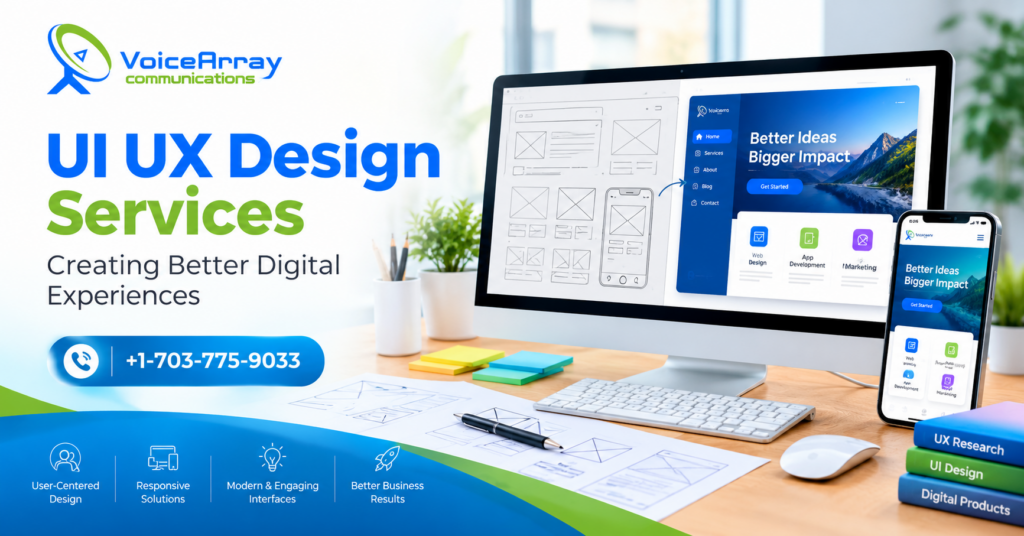
A professional UI UX design process can include several connected stages.
User Research and Discovery
Design should begin with an understanding of the people who will use the product.
Research may examine:
- Target audiences
- User needs and expectations
- Existing customer behavior
- Competitor experiences
- Business objectives
- Common usability problems
- Existing analytics and customer feedback
This information provides a foundation for making design decisions based on evidence rather than assumptions.
Information Architecture
Information architecture determines how content, features, and navigation are organized.
A strong structure helps users understand where they are, where they can go next, and how to find important information.
For websites and applications with many pages or features, information architecture can be especially important because a visually attractive interface cannot compensate for confusing organization.
User Flows and Wireframes
User flows map the steps a person may take to accomplish a specific objective.
For example, an ecommerce user flow might involve:
Product discovery → Product page → Cart → Checkout → Confirmation
Wireframes then provide a simplified representation of screens and layouts before detailed visual design begins.
This stage allows teams to identify structural problems early, when changes are generally easier to make.
UI and Visual Design
UI design transforms the underlying structure into a polished interface.
This may include:
- Typography
- Color systems
- Buttons and controls
- Icons
- Forms
- Cards
- Navigation
- Spacing
- Images
- Design systems
- Responsive layouts
The objective is to create a visual language that is consistent across the digital product while keeping important interactions understandable.
Prototyping
Interactive prototypes allow teams to experience how screens connect before development is completed.
Prototypes can demonstrate navigation, interactions, transitions, forms, and important user journeys.
They can also provide a practical way to communicate design concepts with developers, stakeholders, and clients.
Usability Testing
Usability testing evaluates whether real or representative users can complete important tasks successfully.
Nielsen Norman Group describes usability as focusing on making designs easy, efficient, and satisfying to use, with user testing helping teams identify problems and opportunities.
Testing can reveal issues that may not be obvious to designers or developers.
UI UX Design for Websites and Applications
UI UX Design Services can be applied across many types of digital products.
Website UI UX Design
Website UX can focus on navigation, content hierarchy, forms, calls to action, mobile usability, accessibility, and conversion journeys.
For business websites, the experience should make it easy for visitors to understand:
- What the company offers
- Who it serves
- Why it is relevant
- What action the visitor should take next
Mobile App UI UX Design
Mobile interfaces require careful consideration of smaller screens, touch interactions, navigation patterns, loading states, and device-specific behavior.
A mobile-first approach can help teams prioritize essential information and interactions instead of simply shrinking a desktop interface.
Ecommerce UI UX Design
For ecommerce businesses, UX can influence product discovery, filtering, product comparison, cart management, checkout, account creation, and post-purchase experiences.
The design should minimize unnecessary steps while providing users with enough information to make informed decisions.
SaaS and Web Application Design
SaaS platforms often contain complex workflows, dashboards, settings, reports, permissions, and account functionality.
UI UX design can help organize this complexity through clear navigation, reusable components, understandable terminology, and consistent interaction patterns.
UI UX Design Services and Accessibility
Accessibility should be considered throughout the design process rather than treated as a final checklist.
Accessible UI UX Design considers how people with different abilities may interact with a website or application.
Important considerations can include readable typography, sufficient contrast, keyboard navigation, meaningful labels, logical focus states, accessible forms, and clear error messages.
Accessibility can also improve usability for people who may not identify as having a disability, including users navigating on small screens, in bright environments, with temporary limitations, or with different levels of digital experience.
How the UI UX Design Process Works
A structured process helps connect design decisions with real user and business requirements.
1. Discovery: Understand the product, audience, competition, and business objectives.
2. Research: Gather information about users, existing experiences, and usability challenges.
3. Structure: Develop information architecture, user flows, and wireframes.
4. Design: Create the visual interface and reusable design components.
5. Prototype: Build interactive representations of important journeys.
6. Test: Evaluate usability and identify areas for improvement.
7. Handoff: Provide development-ready designs, specifications, and assets.
8. Improve: Use feedback, analytics, and real-world behavior to continue refining the experience.
This iterative approach is important because design does not necessarily end when a website or application launches.
How to Choose UI UX Design Services
When evaluating a UI UX design provider, look beyond visual portfolios.
Consider whether the team can explain:
- How they conduct user research
- How they define project requirements
- How they approach responsive design
- How they test usability
- How they consider accessibility
- How they collaborate with developers
- How they measure design outcomes
- How they handle revisions and feedback
A strong provider should be able to connect design decisions to user needs and business objectives rather than simply presenting attractive mockups.
UI UX Design Services for a Better Digital Strategy
Modern digital design increasingly involves multiple devices, channels, and interaction patterns. Users may discover a company through search, visit its website on a phone, return through a desktop computer, contact support, and continue the journey through an application or online portal.
That means UI UX Design should be considered as part of the broader digital experience.
VOICEARRAY approaches digital design with the understanding that design, technology, content, performance, and business objectives need to work together. A useful interface should not only look professional but also help users complete meaningful tasks with less friction.
Google’s current guidance also emphasizes overall page experience, including mobile usability, security, Core Web Vitals, and avoiding intrusive elements that interfere with the main content.
FAQs
What is UI UX Design Services?
UI UX Design Services help businesses design and improve websites, mobile applications, SaaS platforms, ecommerce stores, and other digital products. They can include research, information architecture, wireframing, prototyping, visual interface design, usability testing, responsive design, accessibility, and design handoff.
Why are UI UX Design Services important?
UI UX Design Services are important because users need digital products to be understandable, efficient, and easy to navigate. Good design can reduce friction, improve usability, support accessibility, and create clearer customer journeys while helping a business present its products or services more effectively.
What is the difference between UI and UX Design?
UI Design focuses primarily on the interface users see and interact with, including layouts, typography, colors, buttons, forms, and visual components. UX Design considers the broader experience, including user needs, navigation, workflows, usability, accessibility, and how effectively users accomplish their goals.
How do I choose the right UI UX Design Services provider?
Look for a provider that combines visual design skills with research, usability, responsive design, accessibility, prototyping, testing, and development collaboration. Review case studies and ask how the team connects design decisions to user needs, technical requirements, and measurable business objectives.
Conclusion: Build Digital Experiences People Understand
UI UX Design Services are about more than creating attractive screens. They help businesses understand users, organize information, simplify interactions, improve accessibility, and build digital products that support real objectives.
From website UX and mobile applications to ecommerce platforms and SaaS products, thoughtful UI UX Design can create a more consistent and understandable digital experience.
If your business needs a website, application, ecommerce platform, or digital product designed around users and business goals, VOICEARRAY can help turn complex requirements into clear, practical digital experiences.
Contact VOICEARRAY to discuss your UI UX Design requirements and explore a design approach built around your users, technology, and business objectives.